
Tile adhesives
Tile adhesives are specialized adhesive materials used in the installation of ceramic, porcelain, glass, and natural stone tiles on various surfaces, such as walls, floors, and countertops. They are a crucial component in the tiling process and are designed to bond the tiles securely to the substrate.
Here are some key points about tile adhesives:Types of Tile Adhesives:
- Cement-Based Tile Adhesives
- Thinset Mortar
- Mastic Adhesive
- Epoxy Adhesives
- Modified vs. Unmodified Adhesives
- Substrate Compatibility
- Application
- Trowel Selection
- Drying and Curing
- Grout
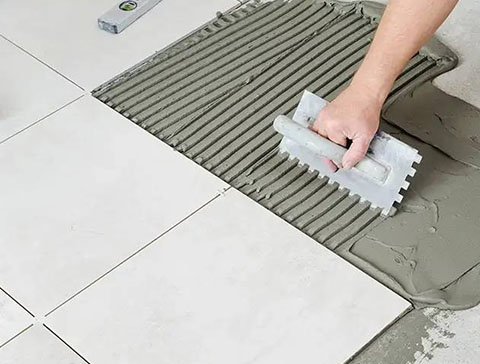
Cement-Based Tile Adhesives :
These are the most common type and are composed of cement, sand, and often a polymer additive. They are suitable for a wide range of tile applications, including interior and exterior surfaces.
Thinset Mortar :
A type of cement-based adhesive, often used for setting tiles on floors and walls. It comes in powdered form and is mixed with water before use.
Mastic Adhesive :
This adhesive is premixed and ready to use. It is suitable for some interior wall tile applications but is not recommended for areas with high moisture levels.
Epoxy Adhesives :
Epoxy tile adhesives provide a strong bond and are suitable for special applications, such as installing glass tiles or tiles in swimming pools.
Modified vs. Unmodified Adhesives :
Many tile adhesives include polymer modifiers (such as latex or acrylic) to enhance flexibility, adhesion, and durability. Modified adhesives are often preferred, especially in areas prone to temperature fluctuations or where flexibility is crucial.
Substrate Compatibility :
It's important to select an adhesive that is compatible with the substrate (e.g., concrete, drywall, cement backer board) and the type of tile being installed.
Application :
The type of tile and the location where it will be installed (e.g., dry or wet areas) will determine the choice of adhesive. For example, wet areas like showers and baths often require waterproof adhesives.
Trowel Selection :
The size and type of trowel used to spread the adhesive on the substrate will impact the thickness and coverage of the adhesive layer, affecting the tile installation.
Drying and Curing :
After tiles are set in the adhesive, there is a drying and curing process. The specifics vary depending on the type of adhesive used.
Grout :
After the adhesive has set and the tiles are in place, grout is used to fill the gaps between the tiles. The choice of grout should complement the tile adhesive and the design.
Proper selection and application of tile adhesives are essential for a successful and long-lasting tile installation. It's important to follow the manufacturer's recommendations and guidelines for the specific adhesive being used to ensure a strong and durable bond.



Copyright © 2023 Unicorn . All rights reserved Powered by: Keyword India Network Pvt. Ltd.